
Fuel Shortage in Bali Causes Long Queues, What About Lombok?

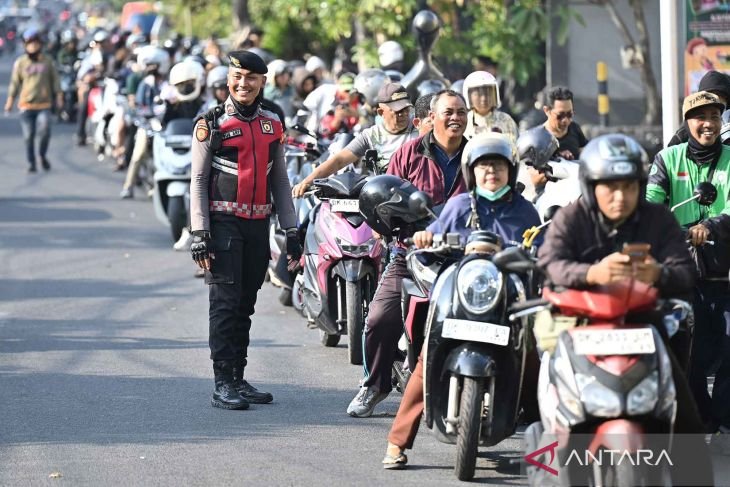
A sudden fuel shortage has occurred in Bali over the past few days. Long queues have been seen at petrol stations across the island.
Something we thought was unlikely to happen has become a reality. We have heard stories from friends who have been queuing for hours just to get petrol. Work, travel, and economic activities have inevitably been disrupted in recent days.
So, who should be held responsible? It seems like a question with an obvious answer.
People have little power to prevent or resolve a situation like this. Stoicism feels like a less useful philosophy when, for example, you are a motorcycle taxi driver who needs to work the next morning but cannot ride because your tank is empty. Or when you have to cancel a trip for tourists who booked your travel service a month ago because, even after turning the ignition, your car cannot go anywhere without fuel.
As of today, our friends in Bali are still queuing, waiting, and hoping that things will soon return to normal. What kind of strategy is this?
Friedrich Nietzsche may not have been entirely wrong when he described hope as a poison.
“Hope in reality is the worst of all evils because it prolongs the torments of man.” — Friedrich Nietzsche, German philosopher.
If you want to know why it happens, here is the reason of sudden fuel shortage in Bali that causes long queues, According to Antara News, the disruption was caused by a technical issue with a fuel tanker during unloading. A problem with the vessel’s anchor delayed its scheduled docking and unloading from 6:30 a.m. on Monday, 12 October, until around 10 p.m. Central Indonesia Time.
Thats what the authority said.
What About Lombok?
We are writing this with some concern that a similar shortage could happen in Lombok. As an island separated from Java, where much of Indonesia’s industrial and economic activity is concentrated, Lombok depends on fuel distribution across the islands. A fuel shortage here is a possibility that cannot be entirely ruled out.
Of course, there could be many explanations: war, a leaking pipeline, a sunken tanker, or other problems beyond anyone’s control.
For now, as Lombok locals who use petrol ourselves, we have not seen a fuel shortage on the island. We are grateful that this has not happened here.
In Indonesia, petrol is sold and distributed through petrol stations across the country by the state-owned Pertamina. Pertamina plays a dominant role in fuel distribution.
What Should We Do Now?
In our humble view, the first thing to do is avoid panic buying. This would only make the situation worse and create further pressure on fuel supplies.
At the same time, perhaps this is another reminder of the importance of energy diversification. Petrol is not the only energy source that can support our daily mobility.
The use of renewable energy needs to be expanded. Electric cars? Yes, that is one option. But it also raises another question: what is the point of driving electric cars and motorcycles if the electricity powering them still comes from polluting energy sources?
What we mean is that collective efforts are needed to encourage the government to take meaningful steps towards the transition to renewable energy. Last year, Portugal managed to run entirely on renewable energy for six days. Perhaps, as we move towards that kind of energy system, we can also begin replacing our vehicles with more environmentally friendly alternatives.
What else? Cycling, perhaps. For those who can travel short distances by bicycle, it might be time to start using them again. Cycling can be fun.
Walking, too. For short distances, just walk. But policymakers also need to improve sidewalks and make them more pedestrian-friendly. Our streets are heavily centred around motor vehicles, and perhaps it is time to rethink that approach.
Annica, nothing lasts forever. The fuel shortage is not gonna last forever too.