
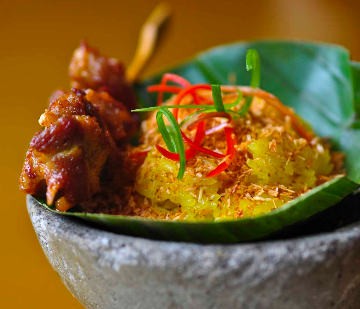
Every year during the Islamic month of Rabi’ul Awal, the people of Lombok—especially the Sasak community—celebrate the birthday of Prophet Muhammad SAW in a deeply cultural and spiritual way. One of the most iconic traditions is preparing a special dish called Banget Mulud, also known as Nasi Rosul. It’s not just food—it’s a symbol of joy, faith, and unity.
What is Banget Mulud?
Banget in the Sasak language refers to stickiness or being tightly attached, while Mulud is a local term for Maulid, the celebration of the Prophet Muhammad’s birthday. It’s a special dish made from yellow sticky rice (glutinous rice) mixed with turmeric, coconut, and traditional spices. This Lombok food is served only once a year during Maulid celebrations and is not sold commercially. Together, Banget Mulud symbolizes the people’s deep attachment to the Prophet’s teachings—just like how sticky rice clings together.
Traditionally, Banget Mulud is presented in a festive food tray (called dulang) along with other homemade snacks and dishes like fried chicken, vegetables, and side condiments. The rice is carefully shaped into a mound and layered with spicy grated coconut, roasted soybeans or peanuts, and shredded chicken, then covered with more yellow sticky rice on top. This layered structure is not just for taste—it’s arranged so that Banget Mulud is the first thing seen when the food cover is opened.
More Than Just Food
Banget Mulud is deeply symbolic. According to local beliefs, the word “Banget” also refers to the sticky texture of the rice, which is seen as a metaphor for sticking to the teachings of the Prophet. It reflects the Sasak people’s love and loyalty toward Prophet Muhammad, encouraging them to hold on to Islamic values tightly—just like sticky rice.
The Maulid celebration in Lombok lasts a full month, moving from village to village. It’s one of the most vibrant and spiritual periods of the year, even more festive than national holidays. Families prepare large amounts of food, often sacrificing chickens, goats, or cows depending on how big the celebration is. It’s also common to see competitions in Qur’an recitation, Islamic knowledge quizzes, and traditional arts at local mosques throughout the island.
How It’s Made
The ingredients are simple, but the process takes time and care:
- Sticky rice soaked and steamed until soft
- Mixed with turmeric water to get that golden color
- Layered with seasoned grated coconut (serundeng), fried soybeans or peanuts, and shredded chicken
- Formed into a mound using banana leaves, with a little coconut oil to prevent sticking
This dish is often accompanied by side dishes like fresh herbs, vegetables, or fish curry—depending on the family’s taste.
A Once-a-Year Lombok Food Experience
You won’t find Banget Mulud in restaurants or food stalls. It’s a seasonal food made only during Maulid and is shared among family, friends, and the community. If you’re visiting Lombok during Rabi’ul Awal (usually around September or October), you might be lucky enough to taste it—just ask locals about Muludan celebrations.
Banget Mulud isn’t just one of the most unique Lombok food traditions—it’s a meaningful way the Sasak people show love for the Prophet and strengthen community bonds through cooking and sharing. If you’re exploring local food culture in Lombok, this once-a-year dish is a beautiful glimpse into spiritual culinary heritage.
Read also: Maulid Adat Bayan




 lombokdispatch.id