
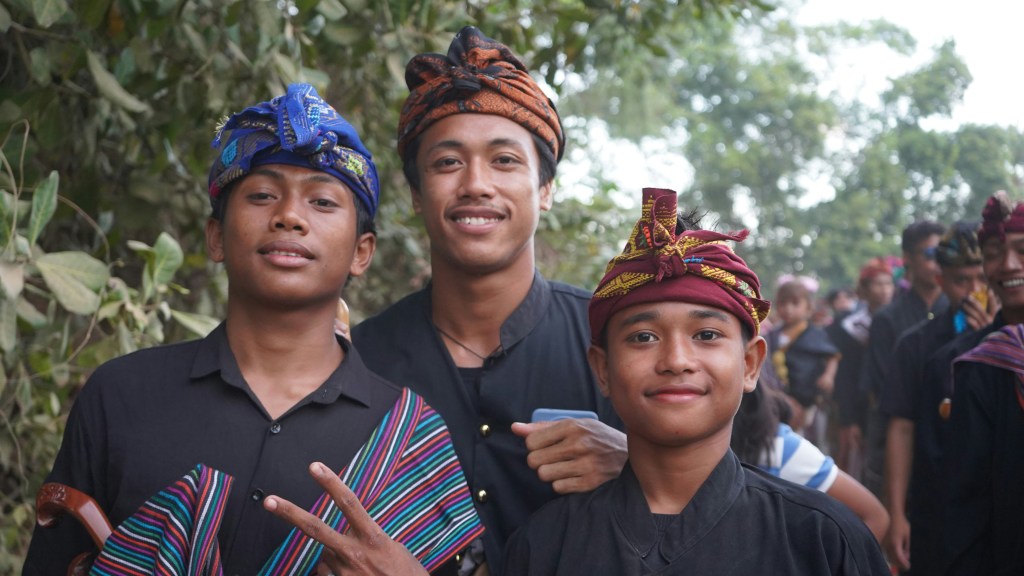
If you’ve ever traveled across Lombok or browsed the names of local figures, you’ll quickly notice a trend: many men are named “Lalu” and many women “Baiq.” These are not just ordinary names. They are part of a deeper cultural system rooted in the Sasak people’s history and identity. Here’s what those titles really mean, and the fascinating backstory behind them.
The Sasak People and Their Cultural Roots
The Sasak people are the native ethnic group of Lombok, Indonesia. With their own language, customs, and traditions, the Sasak have long preserved a distinct identity, even as neighboring Bali gained global fame. One of the most visible cultural signatures of the Sasak is their naming tradition, particularly the use of the titles “Lalu” for men and “Baiq” for women.
What Do ‘Lalu’ and ‘Baiq’ Actually Mean?
“Lalu” and “Baiq” are noble titles used in Sasak society. Traditionally, these were reserved for people of aristocratic lineage. “Lalu” is used for men, and “Baiq” for women. These titles are placed at the beginning of a person’s name and signal descent from a noble bloodline.
But beyond noble heritage, these titles also became associated with social privilege and education. During the Dutch colonial era, men who bore the title “Lalu” were often the only ones given access to higher education. The name came to represent not just lineage, but status and intellect.
The Politics Behind the Titles
The history of these names isn’t just cultural—it’s political. According to local historians, the widespread use of “Lalu” and “Baiq” may have been influenced by Bali’s control over Lombok in the 17th century. At the time, the original noble titles in Sasak society were “Raden” (for men) and “Denda” (for women).
Balinese rulers, in an effort to weaken Sasak aristocracy, are believed to have introduced the alternative titles “Lalu” and “Baiq.” This naming strategy was a subtle way to lower the perceived status of the Sasak nobility, especially for those who married outside their class. Children born from such unions would no longer receive the title “Raden” or “Denda”—instead, they’d be called “Lalu” or “Baiq.” The intention? Undermine noble lineage, sow internal conflict, and eventually erode the political power of the local elite.
The Sumbawa Connection
Not all historians agree with the Bali theory. Another perspective traces the origin of “Lalu” to Sumbawa, an island east of Lombok, where similar noble titles like “Lalu” and “Lale” were used historically. Given Sumbawa’s cultural influence on Lombok, especially through trade and migration, this theory suggests that Sasak naming conventions may have evolved through regional cross-pollination.
What About Raden and Denda?
Interestingly, the original Sasak noble titles haven’t disappeared. In places like Bayan—one of the oldest Islamic regions in Lombok—”Raden” and “Denda” are still used today. These titles carry strong religious and cultural significance, linked to the early spread of Islam on the island through Javanese influence, especially from the Wali Songo. The name “Raden” itself is believed to come from “Rahdin” or “Rahadian,” meaning someone who first embraced the faith.
Who Can Use These Titles Today?
In modern times, the use of “Lalu” and “Baiq” has become more widespread, not strictly limited to nobility. However, traditionally, these titles could only be passed down from the father. So if a woman with the title “Baiq” married a man without noble blood, their children would not inherit the title.
Despite shifts in usage, these titles remain an essential part of identity in Lombok. You’ll see them in official documents, public figures’ names, and everyday introductions. They serve as living reminders of the island’s layered history, from colonial manipulations to cultural resilience.
Final Thoughts
The names “Lalu” and “Baiq” are more than just prefixes—they’re cultural markers loaded with meaning, history, and pride. They tell the story of the Sasak people: their noble roots, their struggles under colonial and foreign influence, and their enduring traditions.
So next time you meet someone in Lombok named Lalu or Baiq, know that you’re not just hearing a name—you’re witnessing a legacy.
 lombokdispatch.id