
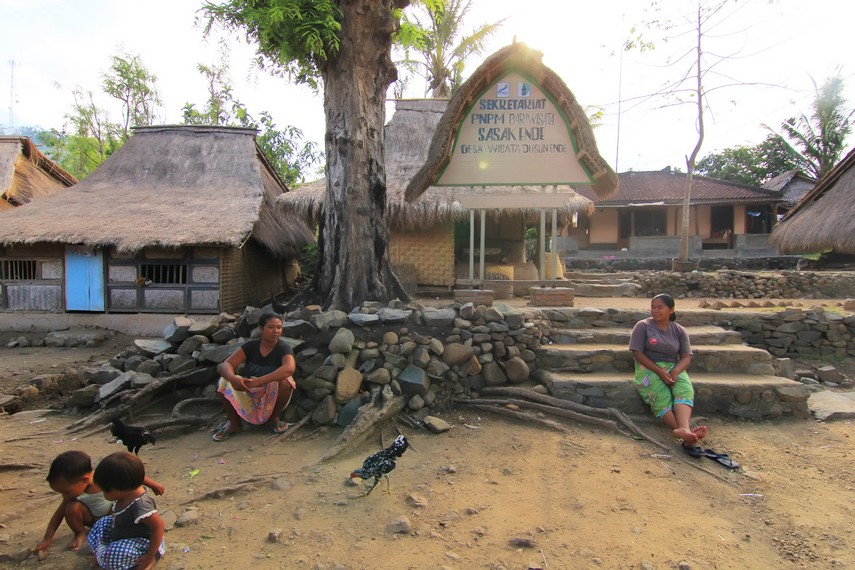
Ende is a traditional hamlet. Its residents carry out their daily activities while upholding traditions rooted in their ancestors. Ende Hamlet is home to the Sasak people, the indigenous people of Lombok Island. Like Sade Village, Ende Village also preserves Sasak culture. For those looking to learn about the culture, this is a great place to visit.
Spanning approximately one hectare, exploring Ende Hamlet doesn’t take long. The sight of the houses with their thatched roofs, a hallmark of the Sasak people, is certainly a captivating sight. With their deliberately slanted roofs, guests are expected to bow their heads as a sign of respect for the host. This is a beautiful philosophical concept still present in Lombok.
The Uniqueness of Ende Village
The well-preserved traditional buildings and houses in the Ende Sasak Tourism Village are one of Ende’s unique features, known as Bale Tani.
Taken from the Go Mandalika website, the bale tani, which is a traditional residence; the bale jajar, used as a community meeting hall; the berugak, a traditional gazebo-like structure used for socializing and receiving guests; the bale alang, used for storing rice and harvested crops; and the jejangak, a watchtower for village security.
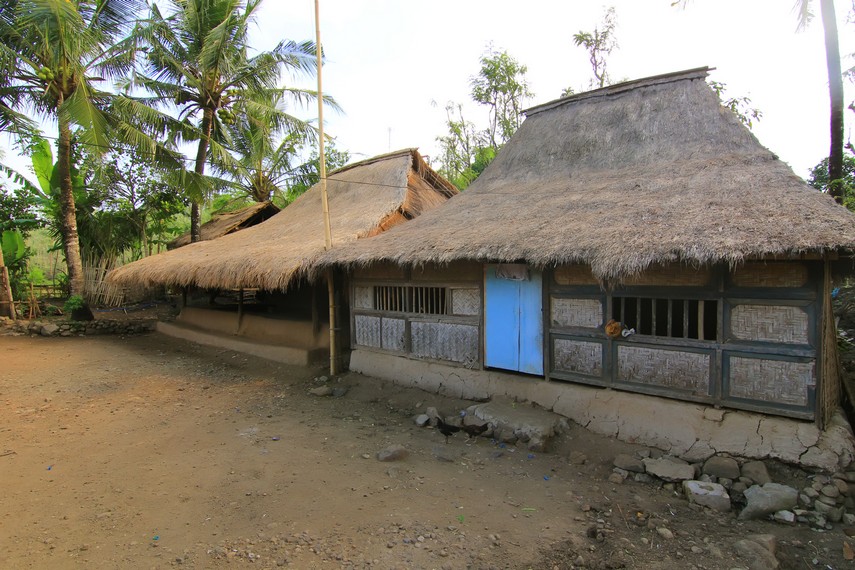
All of these traditional buildings still use traditional materials, such as roofs made of dried thatch, bamboo fences, and dirt floors covered with cow dung, intended to symbolize the hard work of the Sasak people, the majority of whom are farmers.
Beyond its architectural form, the Sasak Ende Tourism Village also maintains its artistic traditions, such as regional dances and traditional music. These arts are still practiced regularly by local residents as part of a preservation and regeneration effort.
Guests and tourists visiting this village are usually greeted with musical and dance performances, including genggong music, gendang beleq music, and the peresean dance.
Unique Traditions in Ende Village
According to Indonesia Kaya, there is a unique tradition among the Sasak people in Ende Hamlet: elopement (merariq). In this tradition, the man carries off the woman he loves, without the knowledge of the woman’s parents. The elopement usually lasts for three days. Afterward, the woman’s parents will meet with the man to discuss taking the relationship to a more serious level.
Marriages in Ende Hamlet usually take place within the hamlet’s neighborhood. Marriages between cousins or relatives are still common. If someone wishes to marry outside the hamlet, they must pay a substantial fine.
Islam, the dominant religion in Ende Hamlet, has not weakened these centuries-old traditions. The blend of tradition and Islam makes Ende Hamlet a must-visit when visiting Lombok Island.
Ende Hamlet is approximately 9.1 kilometers from Lombok International Airport. It’s easily accessible by car, as it’s located on Jalan Raya Kuta Lombok. Therefore, if you’re staying near the airport, this could be a great destination.
This village is perfect for those traveling to Lombok with children, as it offers a great opportunity to teach them about the culture.
 lombokdispatch.id