
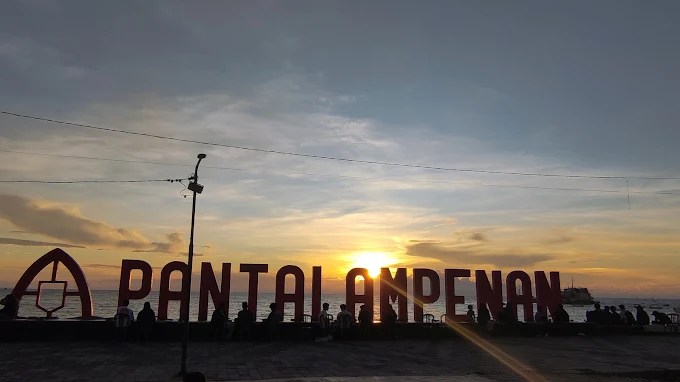
If we turn back time, Ampenan is once a historic port and gateway for trade in Lombok. Right now, Ampenan turns to the city’s heart with a new face — not by erasing its past, but by reshaping its role in the present.
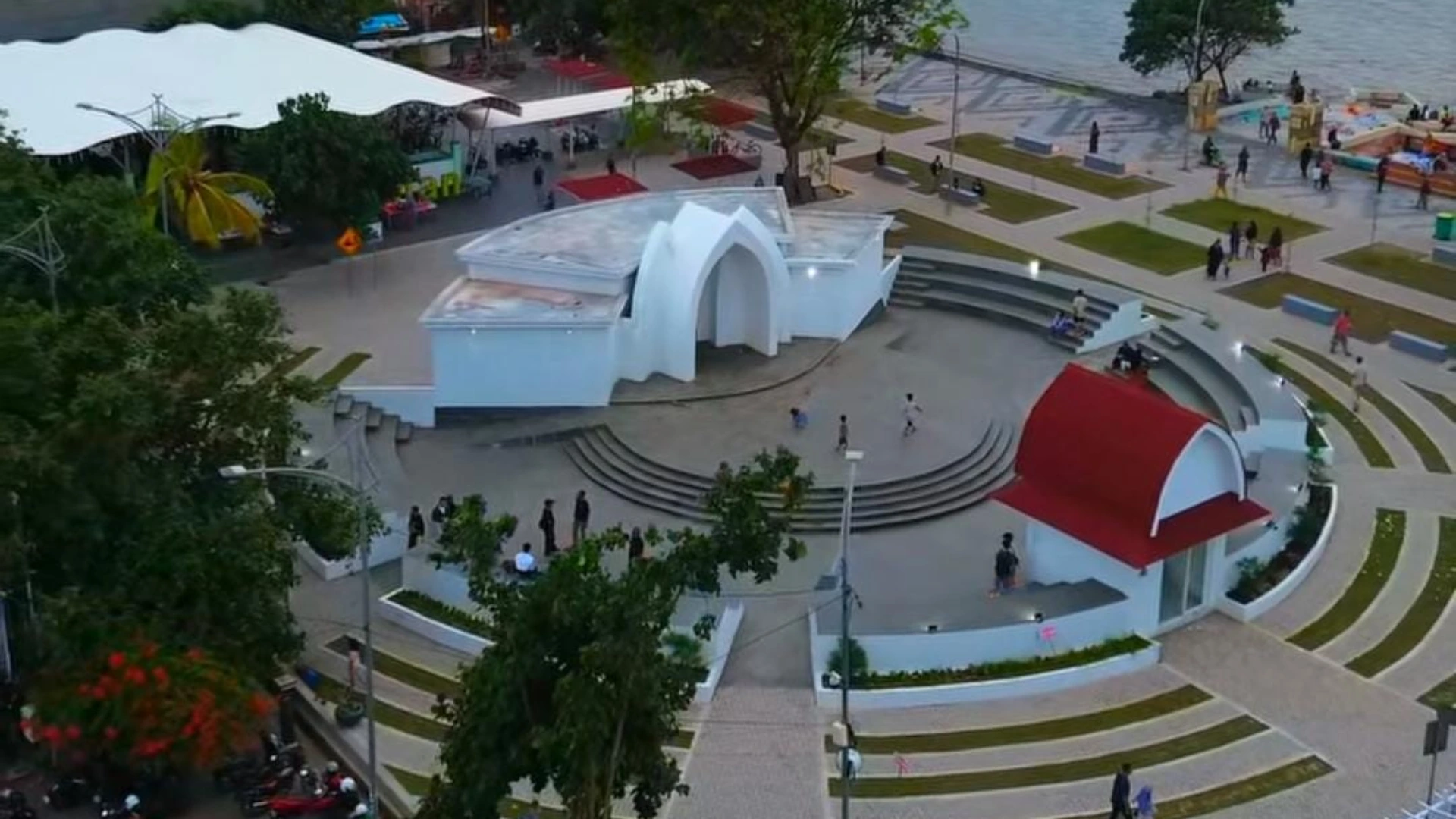
Following a revitalization, the beach now welcomes people that visit the place with a cleaner shoreline, improved facilities, and a newly built mini amphitheater at its center — a space meant for art, music, and the quiet storytelling of a community proud of where it comes from.
As the sun drops over the horizon, families and friends begin to gather. The beach — once forgotten — now draws people in again. Not just for the view, but for the feeling.
There’s a sense of calm that lingers in the air here, especially in the late afternoon. Locals return to watch the sunset. Some bring fishing lines. Others simply sit — by themselves, or with family — watching the ocean take back the day.
A visit here costs almost nothing. Just 2,000 rupiah for a motorbike, or 5,000 for a car, and you’re free to roam the entire waterfront.
A Living Port, Now Remembered
But Ampenan Beach is more than a sunset spot. It’s a living piece of Lombok’s layered history.
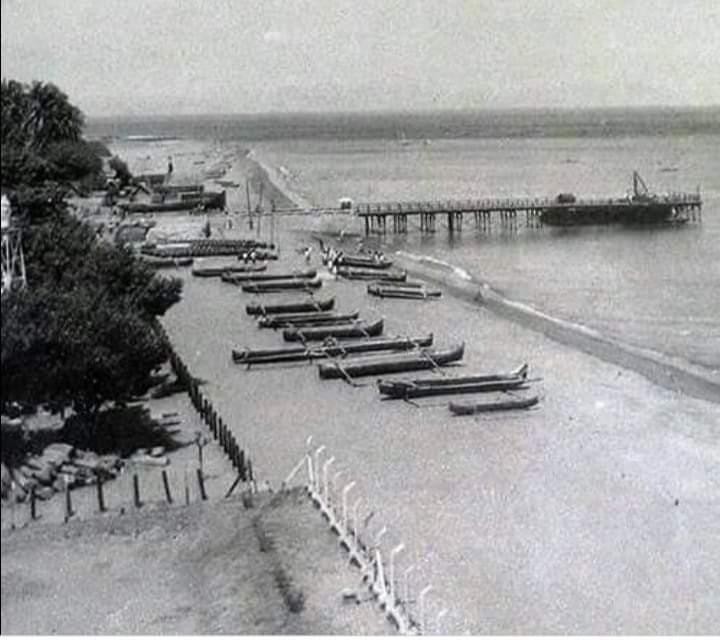
In the 19th century, The Port Ampenan was one of the island’s most important ports. As early as 1840, it served as the gateway for trade under the Mataram-Lombok Kingdom, exporting rice to Manila, China, Mauritius, and across the archipelago.
This strategic significance did not go unnoticed. In 1894, following the Dutch colonial conquest of the Mataram-Lombok Kingdom, the port was seized. The Dutch built docks and introduced policy to control the flow of goods. From here, they shipped out iron, tin, agricultural products, and livestock — transforming Ampenan into a central hub for colonial commerce.
Today, little of that structure remains. Only fragments.
What Remains

At the edge of the beach, the ruins of the old dock still stand — or at least what’s left of it. Twenty-eight steel pillars, now corroded by salt and time, rise quietly from the sea, about 30 meters from shore. They once held up a platform where ships anchored and cargo passed. Now, they lean slightly, rusted, aged, and fragile — but still here.
On land, a few colonial buildings linger. Among them, the remains of the Nederlands Indische Handelsbank — once a Dutch trading bank — now faded, unused, and nearly hidden behind years of change. Its architecture is a mix of European form and tropical adaptation, a quiet monument to the cultural tension and transformation that shaped this place.
Pepole and the locals remember its many uses. After independence, it served as a Bank Indonesia branch. Later, it became a café. At one point, even a shop for secondhand goods. Now, it waits again, holding stories only its walls remember.
Where Memory and Renewal Meet
Today, Ampenan Beach holds two lives at once: the modern energy of a seaside gathering place, and the shadows of ships and merchants long gone.
For the city of Mataram, this beach is no longer a forgotten port. It is a public space once again — shaped by art, by community, and by a deep respect for what once was.
Come for the breeze. Stay for the light. And if you listen closely, you might still hear the echo of sails against the wind.
Read also Take a Stroll Through the Old City of Ampenan Mataram
 lombokdispatch.id