
In Indonesia, the culture of eating together during an event is not something that is rare. You often find this if you come to certain events in various regions in Indonesia. Indonesia is indeed a country that is famous for its solidarity and love of cooperation, so eating together is one of the characteristics of our nation. In fact, Indonesia also has a characteristic of eating with hands that not all countries can accept this culture. However, eating with hands is the most enjoyable thing when eating with the closest people.
However, in Lombok there is a unique thing called begibung. If in other areas eating together only describes the situation of eating together with different plates, in Lombok, begibung is a picture of eating together using one large place and surrounded by several people around it. At first, this culture will feel strange and make us feel awkward, but believe me, the pleasure of eating together from one large container is not that scary and disgusting. Are you curious about begibung? This is the right article for you.
What Is Begibung?
Quoted from the aman.or.id page, begibung is a tradition of eating together that has been passed down from generation to generation in the Sasak tribe, Lombok, West Nusa Tenggara province. One place for begibung called a tray or nare is eaten by 2, 3, 4 people or even more. Usually, this begibung is done en masse during begawe and roah (thanksgiving). In everyday life, this is also done but only with a few people.
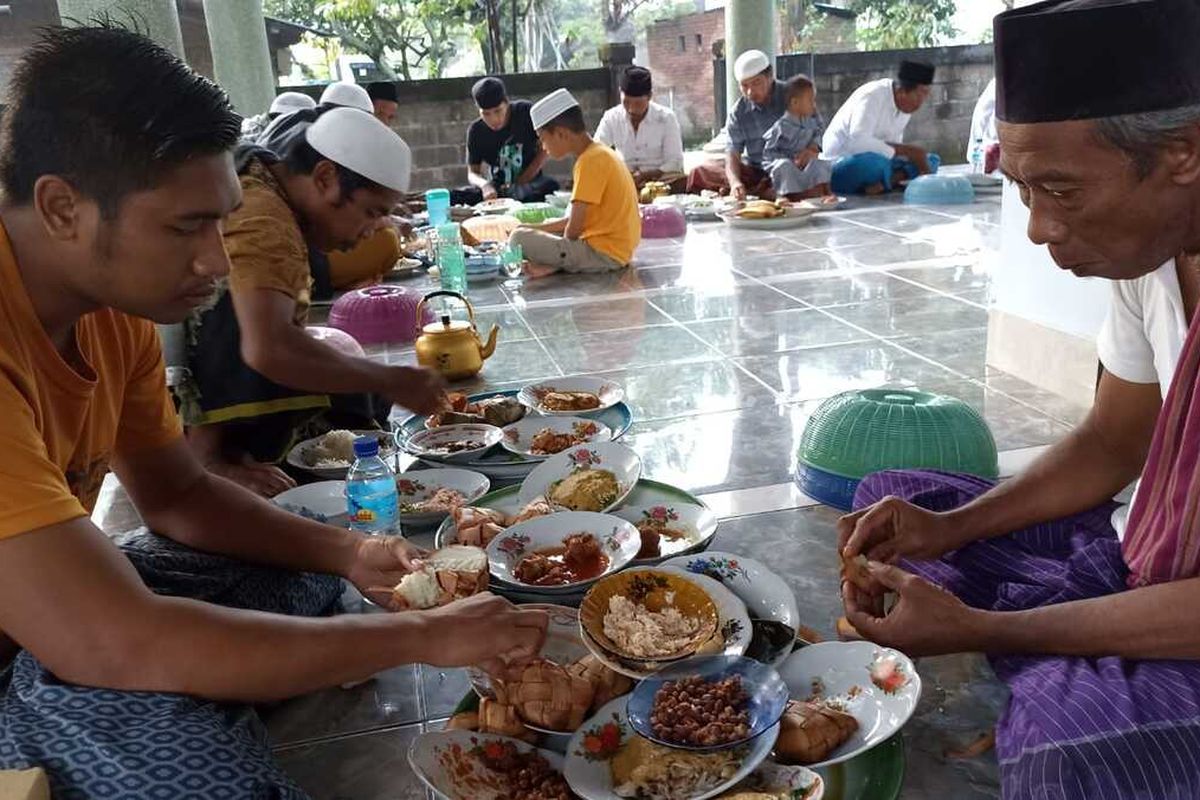
In the indigenous community and the Sasak Tribe, on Lombok Island, West Nusa Tenggara, the begibung tradition is a very common and often done part. Begibung is a tradition of eating together. The container used is usually a tray or often called nare by the Sasak Tribe.
Although it is generally performed at big events, the begibung tradition can also be performed in everyday life as a form of togetherness and is often found in villages in Lombok. There are usually some special foods served for begibung. The food served in begibung usually consists of rice, ares (typical Lombok vegetables), urap, tofu and tempeh, and side dishes such as chicken or fish. In addition to homes or event venues, the begibung tradition can also be found in places such as mosques after Eid prayers in various areas of Lombok. As a form of gratitude and happiness that is present in the midst of society.
The Philosophical Meaning of Begibung
From aman.or.id this begibung is not a tradition that is only ceremonial but is full of philosophical meaning contained therein. First, as a manifestation of equality and justice, because it shows that there is no difference between rich and poor, highly educated and low-educated, officials and ordinary people, and there is no term for special and non-special guests. All are treated equally and merge into one in a dining container called nare. Second, fostering solidarity and brotherhood. In the egalitarian begibung tradition, it indirectly fosters a high sense of solidarity and brotherhood, where this is reflected in their cheerful, happy expressions when begibung, and naturally there are interactions and jokes between those who are eating, so it can be said that unconsciously these interactions strengthen relationships between humans.
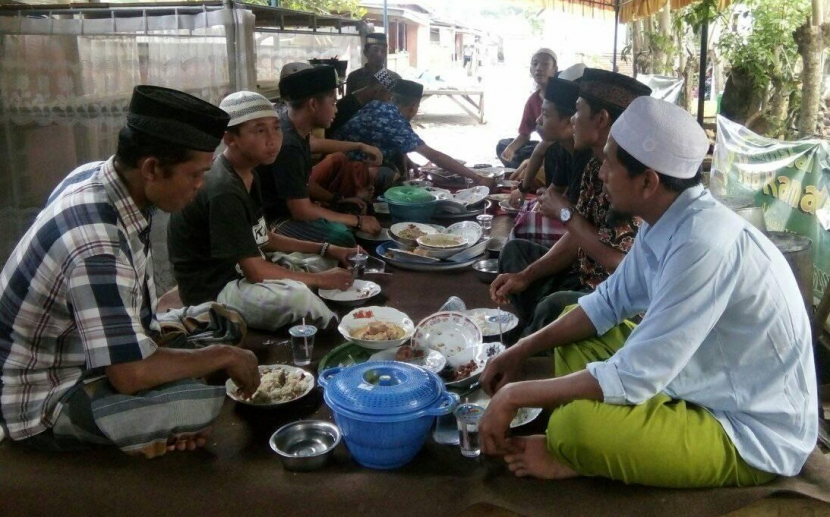
Third, as a connector and glue for kinship ties between communities. Through the begibung tradition, people who have not met and greeted friends, best friends, family for a long time because of their different activities can be reunited. so that it is not uncommon for them to also make an agreement to meet again just to meet and chat. Fourth, instilling simple and humble values. These values can be seen from the simple presentation and the way of eating it which is also simple, not using a spoon, and not sitting on a chair. Far from the impression of luxury, but that is the specialty of this begibung. Not luxurious but friendly. Fifth, maintaining the spirit of mutual cooperation. Another interesting side of this begibung is that afterwards, when all the begibung is finished, the community, both men and women, will help the host to lift and clean all the furniture and others. The values of mutual cooperation are very strong, on the other hand it cannot be denied that this begibung tradition has begun to fade in several places not only in urban areas but also in villages to hamlets that have begun to prefer practicality, simply by ordering catering all problems are solved. This is because in serving begibung, it uses more utensils such as plates, glasses and trays which for some people are troublesome and troublesome and require extra energy to wash the plates and other utensils in very large numbers.
However, we often forget that that is where the values of togetherness, brotherhood, empathy, mutual assistance, and mutual cooperation begin to grow, blossom, and develop. Where in this instant era, these things are starting to become rare and hard to find. So, it is important for us to cultivate and maintain traditions that have philosophical values and good goals.
 lombokdispatch.id