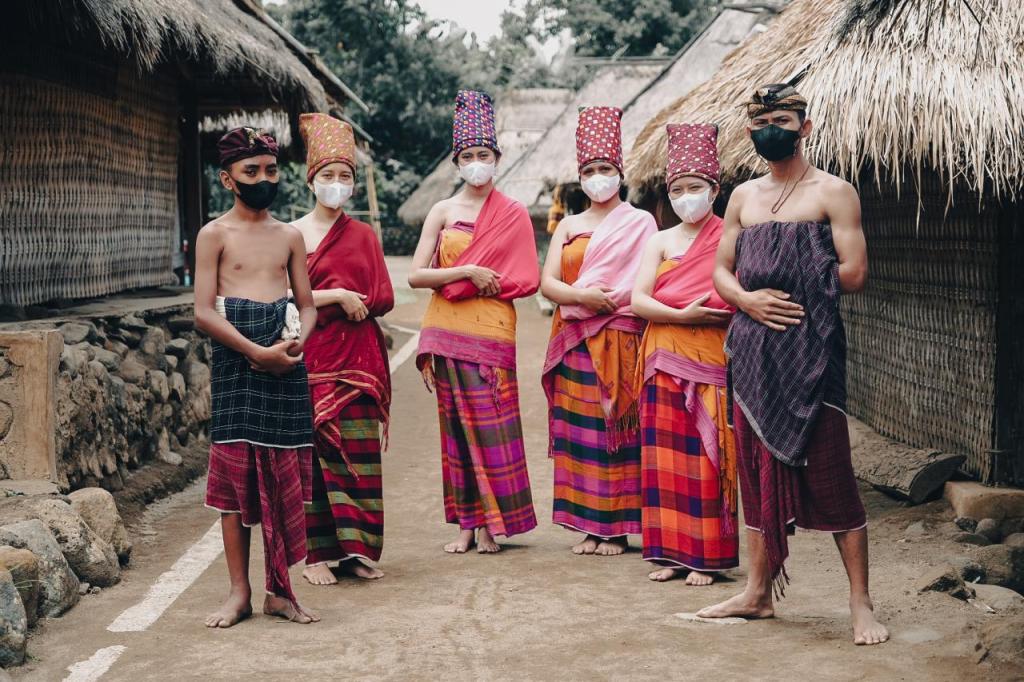
When most travelers think of Lombok, images of turquoise beaches and majestic Mount Rinjani come to mind. But underneath the island’s natural beauty lies a cultural gem that often goes unnoticed: the Sasak language. Spoken by the indigenous Sasak people, this language is more than just a tool for communication—it’s a living archive of history, identity, and social structure.
Where It All Began
According to historical references and as noted on Traveloka.com, the word “Sasak” first appeared in the Pujungan Inscription, estimated to be from the 11th century. This suggests that the language—and the people who speak it—have been rooted in Lombok for centuries.
Linguists believe that Sasak shares linguistic similarities with Balinese and Sumbawanese (Samawa), but it stands apart due to its complexity and diversity. Some theories say the name “Sasak” is derived from “sak-sak,” meaning “one by one,” possibly referring to traditional weaving practices or how communication was historically conducted in isolated communities.
Another perspective, offered by Dutch scholar Dr. C.H. Goris, links the term “Sasak” to Sanskrit origins: “sak” means “to go” and “saka” means “origin,” implying a people who migrated or left their homeland.
A Language with Many Voices
What makes Sasak especially unique is that it’s not a single unified tongue. The language branches into more than five distinct dialects, depending on the region. From the plains of Central Lombok to the mountainous areas of the east, each community has its own version of Sasak—with unique vocabulary, pronunciation, and grammar.
Dialects like Ngeno-Ngene, Menó-Mené, Mriak-Mriku, Meriaq-Meriku, and Kutó-Kuté reflect not only geography but also local customs and identities. Some villages just a few kilometers apart may speak in noticeably different ways. This makes traveling across Lombok feel like entering new linguistic worlds within the same island.
Social Status Embedded in Words
Sasak is also a hierarchical language. Much like Javanese or Balinese, it contains levels of speech that reflect social status, especially when addressing nobility or elders. Those from noble bloodlines or with aristocratic backgrounds (often identified with the title Raden, Baiq, or Lalu) use what locals call “Bahasa Halus”—a refined, respectful version of Sasak.
This high-level Sasak is taught and passed down within families of nobility and is often used during traditional ceremonies, rituals, and formal speeches. It’s a linguistic reminder that class structures and cultural etiquette are still alive in Lombok, especially in the rural heartlands.
The Future of Sasak
Despite the rise of Indonesian as the national language and the growing presence of English due to tourism, Sasak remains the mother tongue for most Lombok natives. In everyday markets, family gatherings, and village meetings, Sasak is spoken fluently and proudly.
However, with increasing urbanization and modernization, some younger generations are less fluent in the traditional forms or formal levels of the language. Linguists and cultural advocates are now pushing for educational programs and digital documentation to preserve this cultural treasure.
Final Thoughts
Sasak isn’t just a language—it’s an identity marker, a reflection of centuries of migration, adaptation, and resilience. If you ever visit Lombok, try to listen closely. The rhythm, tone, and subtle nuances of the Sasak language tell stories far deeper than any guidebook ever could.
 lombokdispatch.id