
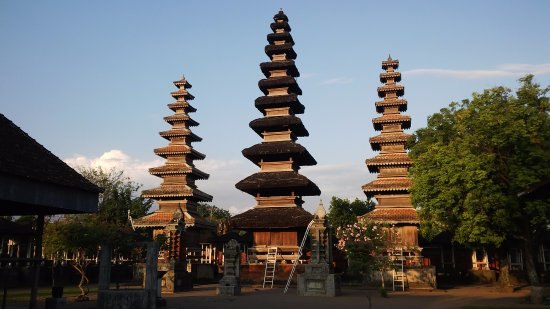
Beyond its landscapes, Lombok also holds a deep cultural and spiritual legacy. Let’s look into more detail on Pura Meru, a historic Hindu temple located in the city of Mataram. More than just a place of worship, Meru Temple is a national cultural heritage site and a symbol of peaceful religious coexistence.
A Historic Landmark in the Heart of Mataram
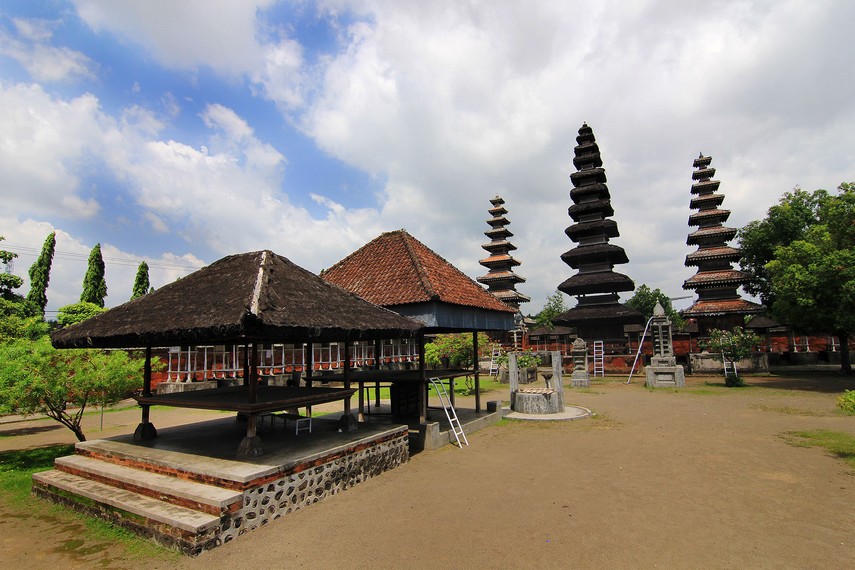
Pura Meru is located on Jalan Selaparang, East Cakranegara, in the Cakranegara District of West Lombok. It stands directly across from Taman Mayura, a historical water palace and popular tourist spot. The temple is easily accessible—around 40 minutes by car from Zainuddin Abdul Madjid International Airport in Praya and about one hour from the Mandalika tourism area in Central Lombok.
The temple complex covers an area of 8,874 square meters, with a length of 174 meters and a width of 51 meters. It is the largest Hindu temple on the island, often called the “Island of a Thousand Mosques.” The name “Meru” is taken from “Semeru,” the tallest and most sacred mountain in East Java, showing the connection to the sacred traditions of Hinduism in Indonesia.
The History of Pura Meru
Pura Meru was built in 1720 by I Gusti Anglurah Made Karangasem, a representative of the Karangasem Kingdom of Bali in Lombok. The temple was constructed to serve as a place of worship for Hindu communities from the smaller kingdoms around Mataram, which were conquered by the Karangasem Kingdom. According to the Babad Lombok (Lombok Chronicle), Hinduism arrived in Lombok around 1691, during a time when most of the native Sasak people were still followers of Islam.
The temple was designated as a national cultural heritage site on 26 February 2007 by the Ministry of National Education and Culture through Decree No. PM.19/PW.007/MKP/2007. Along with Taman Mayura, Pura Meru stands as a silent witness to the peak of Karangasem’s rule in Lombok.
The Three Sacred Meru Towers
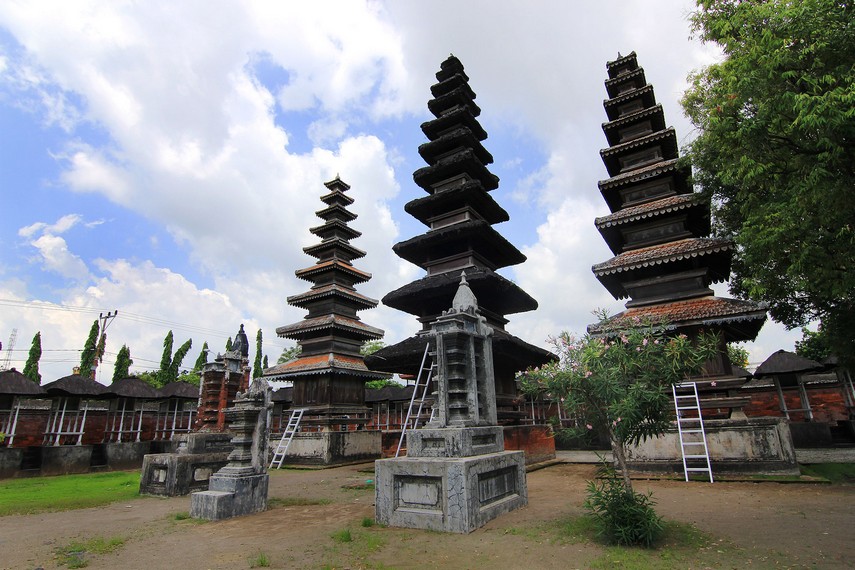
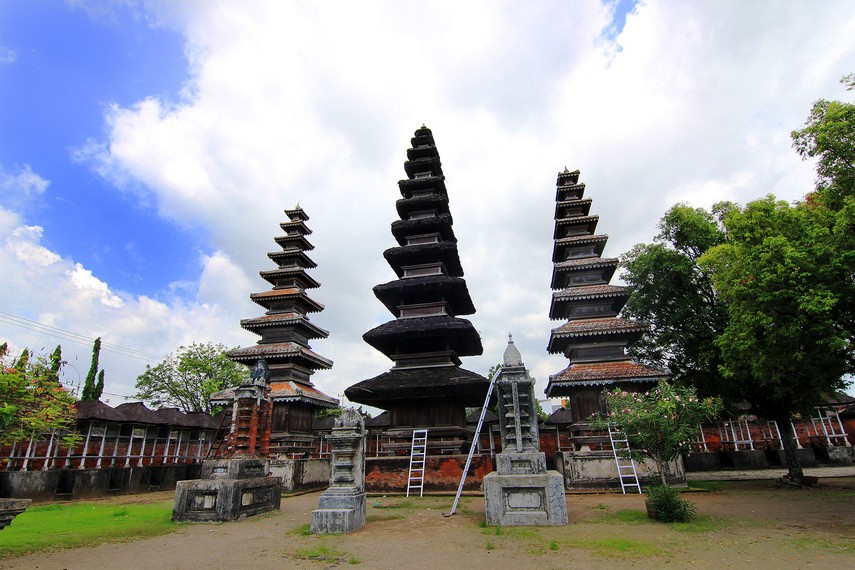
At the heart of Pura Meru are three towering meru structures, each dedicated to one of the main Hindu gods—Brahma, Siwa (Shiva), and Wisnu (Vishnu). These towers are shaped like pyramids with layered roofs that become smaller toward the top, symbolizing the different layers of the universe, from the microcosm (bhuana alit) to the macrocosm (bhuana agung).
- Meru Siwa is the tallest, standing at 18.26 meters on a 3-meter-high base with a 5×5 meter footprint. It has 11 layers of thatched roofing made of black palm fiber (ijuk). This tower symbolizes Mount Rinjani in Lombok.
- Meru Brahma and Meru Wisnu stand on 3-meter-high foundations with a base of 4.3×4.3 meters and reach a height of approximately 15 meters with 9 roof layers. Meru Brahma represents Mount Agung in Bali, while Meru Wisnu represents Mount Semeru in East Java.
Each tower also carries a symbolic color. During piodalan (temple anniversary ceremonies), the towers are decorated with different colored cloths. Meru Brahma is draped in red cloth to represent fire and cremation. Meru Siwa is adorned in white cloth symbolizing water, used to purify ashes before being released into the sea. Meru Wisnu is covered in black cloth, symbolizing darkness and the new life that comes after death.
The Four Sections of Pura Meru
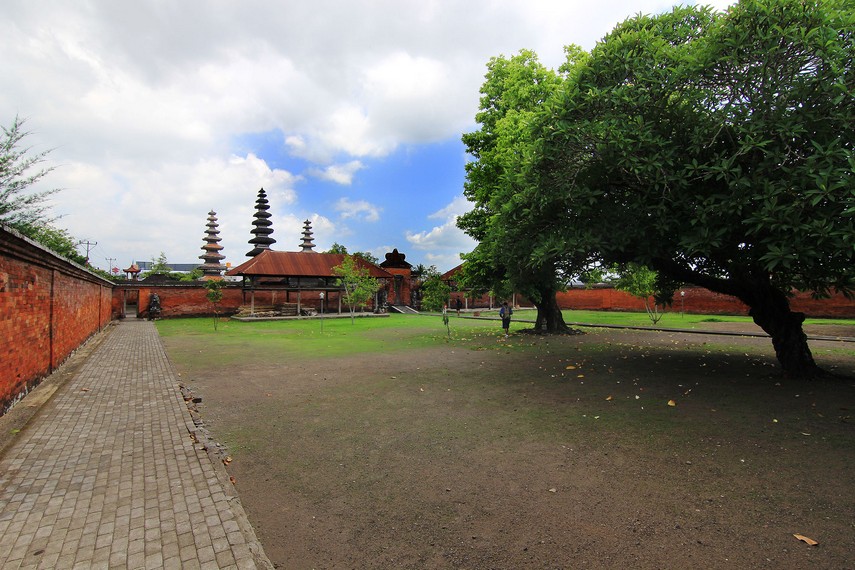
The temple is divided into four main areas, each separated by red-brick walls about 3 to 4 meters high and 80 centimeters thick. These areas are:
- Utama Mandala (Main Courtyard): Measuring 42.5 by 42.5 meters, this is the most sacred part of the temple. It houses the three meru towers, several prayer pavilions, and 29 small six-pillar shrines called sanggar, which represent the 29 banjar (community groups) that contributed to the construction of the temple.
- Madya Mandala (Middle Courtyard): Equal in size to the Utama Mandala, this area features bale petandakan and bale gong, surrounded by tall frangipani and magnolia trees.
- Nista Mandala and Legar Mandala: These two areas are not separated by a wall, making them feel like one open space. The Legar Mandala includes the grand entrance gate, Kori Agung, which serves as the main pathway connecting the middle and main courtyards.
All sections are connected by large entrance gates called gelung kori and guarded by traditional statues known as pemedal alit.
A Center for Hindu Rituals in Lombok
Pura Meru can accommodate up to 5,000 worshippers. It plays an important role during major Hindu religious festivals such as Galungan, Kuningan, and Pujawali. During these events, Hindus from across Lombok come to the temple for prayer and ritual.
The 29 surrounding banjar still play an active role in temple ceremonies. During Pujawali or Usadha, each community group decorates their respective sanggar, continuing a centuries-old tradition of collective worship.
Masjid Nurul Falah: A Symbol of Tolerance

An equally fascinating aspect of Pura Meru is its neighbor, Masjid Nurul Falah, located just to the south of the temple. The two religious buildings are separated by a narrow village lane paved with cone blocks. The mosque, with its two minarets, peeks through the trees that grow around the temple grounds.
The mosque dates back to the reign of Anak Agung Anglurah Gede Ngurah Karangasem, the last king of the Karangasem-Mataram Kingdom, who ruled from 1870 to 1894. Known as a tolerant leader, he was married to a Muslim Sasak woman named Dinda Aminah, who later converted and was known as Nawangsasih.
According to JP Freijss in his book Reizen naar Mangarai en Lombok in 1854–1856, published in Amsterdam in 1860, the mosque was built for Nawangsasih and for the Muslim community living around the temple. This long-standing proximity of a mosque and a Hindu temple serves as a strong symbol of interfaith harmony in Lombok.
Final Thoughts
Pura Meru Cakranegara is more than just a historic Hindu temple. It is a living cultural landmark that reflects the religious, architectural, and social history of Lombok. With its towering meru structures, rich symbolism, and its unique neighbor Masjid Nurul Falah, the temple tells a powerful story of spiritual tradition and peaceful coexistence. For travelers interested in cultural heritage, spirituality, and history, a visit to Pura Meru is both inspiring and unforgettable.
Read also: 6 Mount Rinjani Trekking Routes
 lombokdispatch.id