
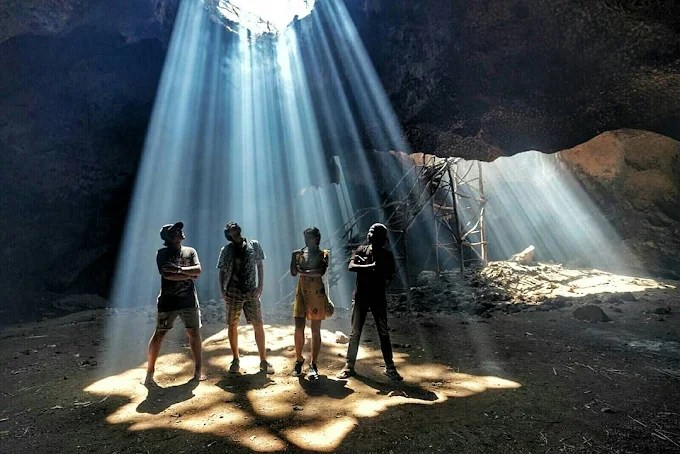
There is a hidden treasures underground—like mysterious caves in Lombok. It called, Gua Bangkang Prabu, located in Bukit Prabu, Prabu Village, Pujut District, Central Lombok, West Nusa Tenggara. This dry and rugged village has also been known as a small-scale gold mining area since the 1990s.
Like Batman HQ, this Cave is Full of Bats
As you approach the entrance, you’ll walk on natural stone steps. From a distance, you might start to hear a strange, echoing noise. The closer you get, the louder it becomes. That sound comes from hundreds of thousands of bats living inside. Isn’t it, it remind you of the Batman HQ?
These are microbats from the Microchiroptera suborder. The high-pitched noise is their way of communicating—warning others of danger or sending social signals. According to research from IPB University zoologist Choirunissa, this is how bats connect and stay safe.
There are five bat species living in this cave. They hang from the ceiling about 20 meters above the ground. Even in the daytime, some are busy flying around. There are so many bats clinging to the ceiling that it appears completely black.
Gua Bangkang Prabu offers the perfect environment for bats—damp, quiet, and with a steady temperature. That’s why locals also call it Bat Cave.
Most bats are found in zones 1 and 2 of the cave. The population can reach 39–47 bats per square meter of wall. With that many bats comes another feature: lots of bat droppings. The smell can be strong, especially along the walls of the cave.
The Light of God
Don’t worry—the smell and effort to get into the cave are totally worth it. After walking about 100 meters into the cave, you’ll reach the main chamber. It’s a large space of around 200 square meters, with walls covered in cream and green-colored stalactites.
Even though the smell from the bat droppings lingers, the air isn’t stuffy thanks to the high ceilings and natural ventilation. Several holes in the ceiling, each 1–3 meters wide, let the wind and sunlight in from above.
When the sun is shining brightly, beams of sunlight stream through the holes like stage lights at a concert. Some rays fall straight down, others angle left or right. Locals call this stunning sight the “Light of God.”
The spot where the sun hits the cave floor has become a favorite photo location for tourists, including many international visitors. Because it’s so close to Mandalika, it’s a must-see stop for anyone exploring the area.
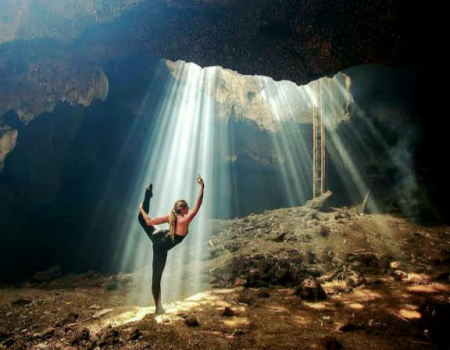
This magical light moment even went viral in 2017 on Instagram, thanks to a yoga teacher and influencer from Minnesota, USA, known as @neyu_ma. She posted two beautiful photos of her doing yoga poses in the beam of light from the cave’s ceiling. One of her captions read, “You are the light that brings illumination.” Thousands of people liked the post, and many became inspired to visit the cave.
A tourist couple from the Czech Republic also shared photos of themselves in the Light of God, with sunlight pouring in from the side and smoke from burning dried leaves outside adding a mystical effect to the scene. They wrote, “We didn’t expect the photo to turn out this amazing. That natural smoke made it even more magical.”
Tips Before You Enter
Before entering, it’s a good idea to bring a mask and wear protective gear like a helmet with a lamp or a hat. Also, wear closed-toe shoes or boots. You can rent plastic helmets and boots at the restaurant near the entrance. Bringing a change of clothes is also smart—just in case bat droppings splash onto your outfit.
More Than Just One Entrance
There’s actually another way to enter the cave. Near the main chamber is a staircase made of dry tree trunks that leads down about 30 meters into the cave. This is another entrance and exit used by locals and adventurous visitors.
Local guide, Budi shared that the main chamber isn’t the only highlight. Caving groups often explore deeper sections of the cave, far into its hidden corridors. The cave’s far end, part of zone 3, is said to stretch up to two kilometers, ending near the cliffs by Kuta Mandalika Beach.
For those wanting to explore deeper, you’ll need professional gear: helmets, flashlights, safety vests, waterproof bags, food, water, and maybe even oxygen tanks. Outside, the lush green forest adds even more charm to this geological wonder.
How to Go to Gua Bangkang Prabu
If you’re staying in Mandalika, visiting Gua Bangkang Prabu is very easy. The cave is only a short 10-minute drive away from The Mandalika area, making it a perfect nature stop for a half-day trip.
Start by heading toward Mawun Road, the main road that connects Mandalika to other nearby villages and attractions. Gua Bangkang Prabu is located in Bukit Prabu, Desa Prabu, in Central Lombok’s Pujut District. This road is smooth and well-paved, with a few turns and hills along the way, but nothing too challenging.
The best part? You won’t get lost. Just open Google Maps and type in “Gua Bangkang Prabu.” The location is already registered and easy to find online.
Once you arrive, there’s a spacious parking lot—around 200 square meters—where you can leave your vehicle. Right by the parking area, you’ll see an open-air restaurant with a beautifully kept green lawn in front. It’s a great place to rest or grab a drink before or after your cave visit.
From the restaurant, a paved path about one meter wide and 100 meters long leads you straight to the cave entrance. On the left side of the restaurant, there’s also a cozy two-story resort with a swimming pool. Look out for the bat statue there—it’s a fun little preview of the cave’s star attraction: thousands of bats living inside.
Address: Prabu, Pujut, Central Lombok Regency, West Nusa Tenggara 83573
When to Visit
If you want to catch the Light of God, be sure to check the weather. If it rains or stays cloudy all morning, the sunlight won’t shine into the cave. The effect depends entirely on clear skies and bright sun.
So if you’re planning to explore Lombok beyond the beaches and mountains, don’t miss Gua Bangkang Prabu—a hidden world beneath the earth, home to bats, legends, and that divine moment known as the Light of God.
 lombokdispatch.id