
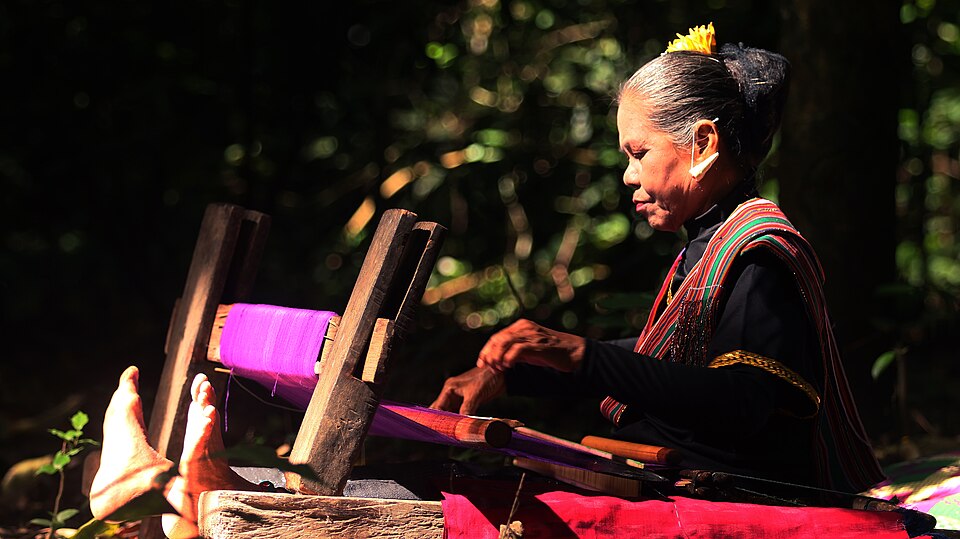
Lombok has rich cultural heritage from the local Sasak people. Among the island’s many treasures, one stands out for its beauty, tradition, and intricate craftsmanship—the art of tenun, or traditional weaving. Let’s discover the special Art of Sasak Weaving in Lombok,
In particular, the villages of Sukarara and Sade in Central Lombok have become iconic destinations for those wishing to experience authentic Lombok weaving firsthand. These two villages are not just centers of craftsmanship but are also living museums that preserve centuries-old customs and artistry.
A Village Woven in Tradition
Desa Sukarara, located in Kecamatan Jonggat, and Desa Sade, nestled in Kecamatan Pujut near Kuta Mandalika Beach, are known as the heartlands of traditional Sasak weaving. In these villages, weaving is more than just a skill—it’s a symbol of identity, a rite of passage, and a source of pride.
Walking through the narrow lanes of Sukarara, visitors will find rows of traditional houses, each with women working diligently on wooden looms. Some of these women began learning the craft at the age of nine, taught by their mothers and grandmothers. In Sasak culture, the ability to weave is essential for every woman—it signifies maturity, readiness for marriage, and a deep connection to heritage.
Before a Sasak woman gets married, she must weave three special pieces: one for herself, one for her future husband, and one for her mother-in-law. This custom is still widely practiced today and speaks to the deep value placed on handwoven textiles within the community.
The Weaving Process: From Nature to Fabric

The journey of a Sasak woven cloth begins with cotton and kapok (randu), harvested and spun into threads. The spinning and dyeing processes are done using natural materials, often derived from plants. Once the threads are ready and dyed in vibrant colors, they are carefully aligned on traditional looms.
Every single thread is placed by hand, a process that requires not only patience but also precision. As the loom clatters with the familiar “sak…sak…” sound—believed to be the origin of the word sèsèk, the Sasak term for weaving—the fabric slowly begins to take form.
The result? A thick, richly textured textile known for its tight weaves, vibrant patterns, and lasting quality. Depending on the complexity of the design, a single piece measuring 60 x 200 cm can take anywhere from two to four weeks to complete.
Patterns with Purpose
One of the things that makes Lombok weaving so special is the symbolism behind each motif. Traditionally, patterns were inspired by nature and beliefs. Before Islam arrived on the island, motifs featured mountain peaks, birds, and Dewi Sri, the goddess of fertility. After the influence of Islam, floral, leaf, and star-like patterns became more common.
Each design has its own meaning. The popular Keker motif, for instance, features two herons facing each other and is often used in wedding attire. Another iconic pattern, and perhaps the most sacred, is the Subahnale motif—a true masterpiece of craftsmanship and spiritual meaning.
The Mystique of the Subahnale Motif

The Subahnale motif stands as a legendary example of Sasak weaving. Named after the Arabic word Subhanallah (Glory be to God), this pattern is believed to hold spiritual significance. Not just anyone can create it—only post-menopausal women are allowed to weave this design.
This requirement is based on the belief that these women have reached a state of spiritual purity and detachment from worldly desires. The weaving process itself is meditative, often accompanied by whispered dzikr (prayers). According to local folklore, the penenun (weaver) may fall asleep during this spiritual trance, but her hands continue weaving, guided by an unseen force.
This sacred aura adds to the allure of the Subahnale motif. It is said that the fabric chooses its owner, not the other way around. Even if offered a high price, the weaver may refuse to sell it if they feel the buyer is not spiritually aligned or “chosen” by the cloth. If the weaver dies before selling the fabric, locals believe the spirit of the weaver remains bound to the cloth, making it difficult to sell.
Weaving as a Cultural Identity
The process of weaving, or sèsèk, is deeply embedded in Sasak identity. The name “Sasak” itself is thought to relate to the weaving technique, where threads are tightly packed together in a repetitive, rhythmic motion—sesak or tight. The looms echo with the repetitive sak…sak…, a sound that has become symbolic of the culture itself.
Despite the modernization and influence from outside markets, many Sasak weavers remain loyal to their traditional methods. The looms are still operated by hand, the threads are still spun and dyed using ancient recipes, and the weaving process is still sacred. These efforts ensure that Sasak weaving continues to be a living tradition, not just a souvenir.
More Than Just a Souvenir
Weaving in Lombok is more than just an economic activity—it’s a way of life, a ritual, and a cultural pillar. Each piece tells a story of patience, tradition, and the enduring spirit of the Sasak people. When someone takes home a piece of Sasak fabric, they carry with them not just a beautiful textile, but also a fragment of history, belief, and love from the heart of Lombok.
For those of you who are planning a visit, Desa Sukarara is just a 20-minute drive from Lombok International Airport, open daily from 6 AM to 8 PM. Whether you’re looking to learn, shop, or simply appreciate, this weaving village offers an unforgettable window into the cultural richness of Lombok.



 lombokdispatch.id
3 responses to “The Unique Art of Sasak Weaving in Lombok”
[…] Read also The Unique Art of Sasak Weaving in Lombok […]
LikeLike
[…] Read also: The Unique Art of Sasak Weaving in Lombok […]
LikeLike
[…] Read also: The Unique Art of Sasak Weaving in Lombok […]
LikeLike