
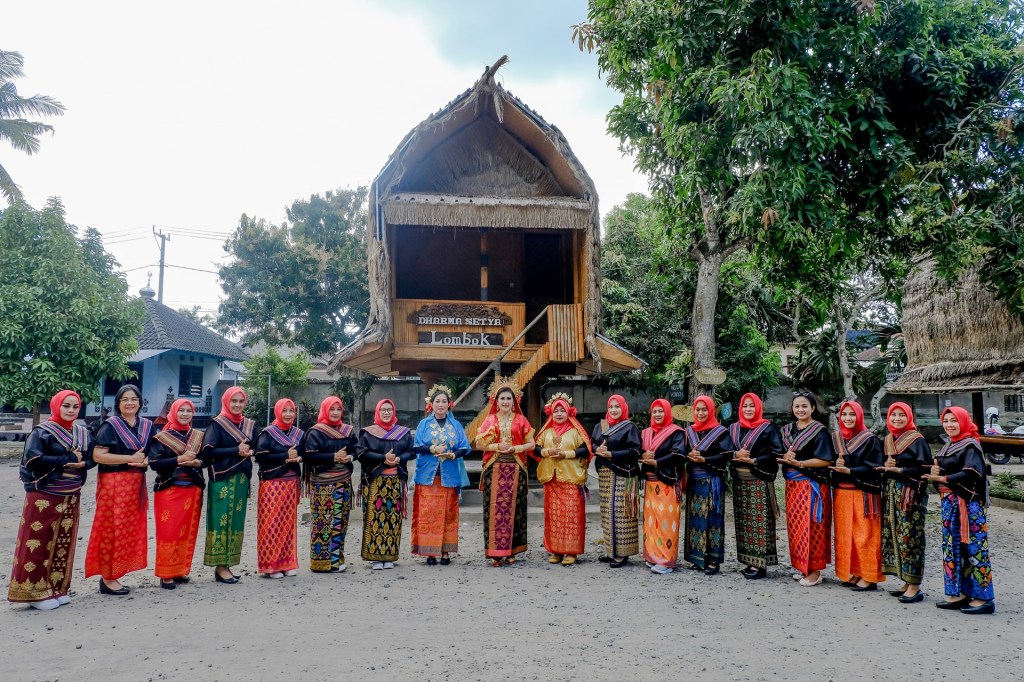
The art and beauty of Lombok’s traditional woven fabrics, or kain tenun sasak, has drawn public attention. These days, the fabrics have become one of the must-buy gift when visiting Lombok. They are more than just a piece of cloth for making clothes. Far beyond that, Lombok’s woven fabric is known as an item rich with spiritual meaning.
Lombok’s Traditional Woven Fabrics
The Weaving Process: A Tradition Passed Down Through Generations
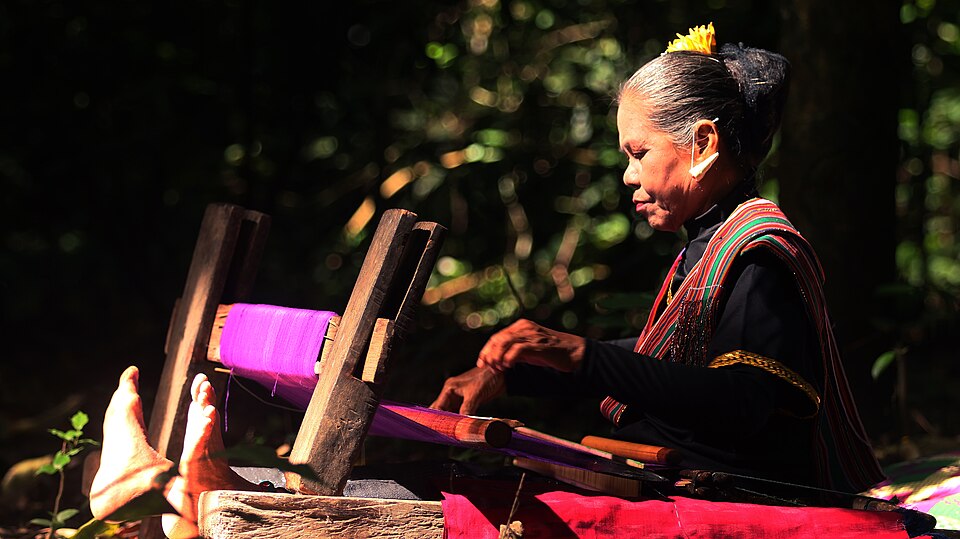
In the Sasak language, weaving is called tesesek, which means inserting threads one by one (sak sak). The threads are then tightened until they become dense or solid, creating fabric through the action of beating the weaving tool.
The weaving skills of the Lombok people have been passed down through generations since ancient times. It is a tradition that requires the younger generations to continue learning and mastering weaving. For example, among the Sasak people, young girls are required to be skilled in weaving. They even begin learning to weave from a very young age.
Weaving and Marriage: A Cultural Requirement
What’s more unique is that, according to local customs, being skilled in weaving is one of the requirements for a woman to be considered ready for marriage. If a Sasak woman has not yet successfully woven at least three fabrics, she is considered unfit for marriage.
Although this traditional rule is no longer as strict as it once was, the people of Lombok still commonly learn the art of weaving. Weaving is not just about preserving culture; it also brings broader benefits.
The Economic Role of Woven Fabrics in Lombok
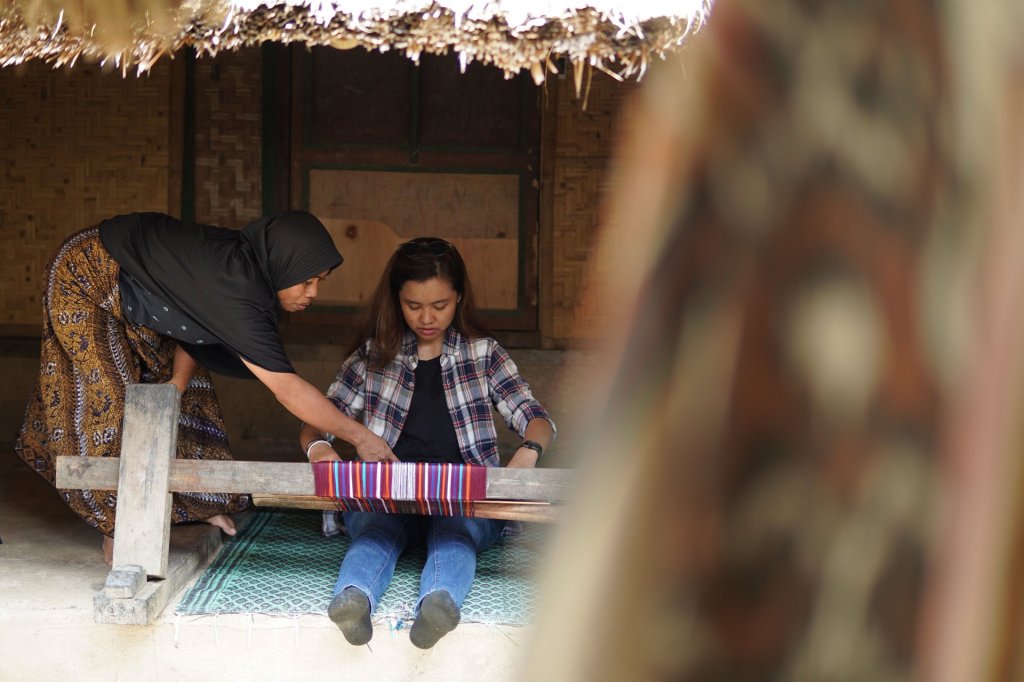
Beyond its spiritual significance, woven fabric has now become a prominent product in Lombok’s creative economy, eagerly sought by tourists visiting the island. In other words, woven fabric today fulfills not only spiritual needs but also the economic needs of the local community.
Distinctive Features of Lombok’s Woven Fabric
Lombok woven fabrics are divided into two types: songket weaving and ikat weaving. Songket fabric is known for its vibrant colors, made from multicolored cotton threads, as well as silver or gold threads. On the other hand, ikat woven fabric is simpler and more functional in design.
This simplicity matches the daily usage of the fabric in Sasak culture. In everyday life, ikat fabric serves several purposes, including swaddling babies, blankets, burial shrouds, and even items used in religious rituals.
The Cultural Influences on Woven Fabric Motifs
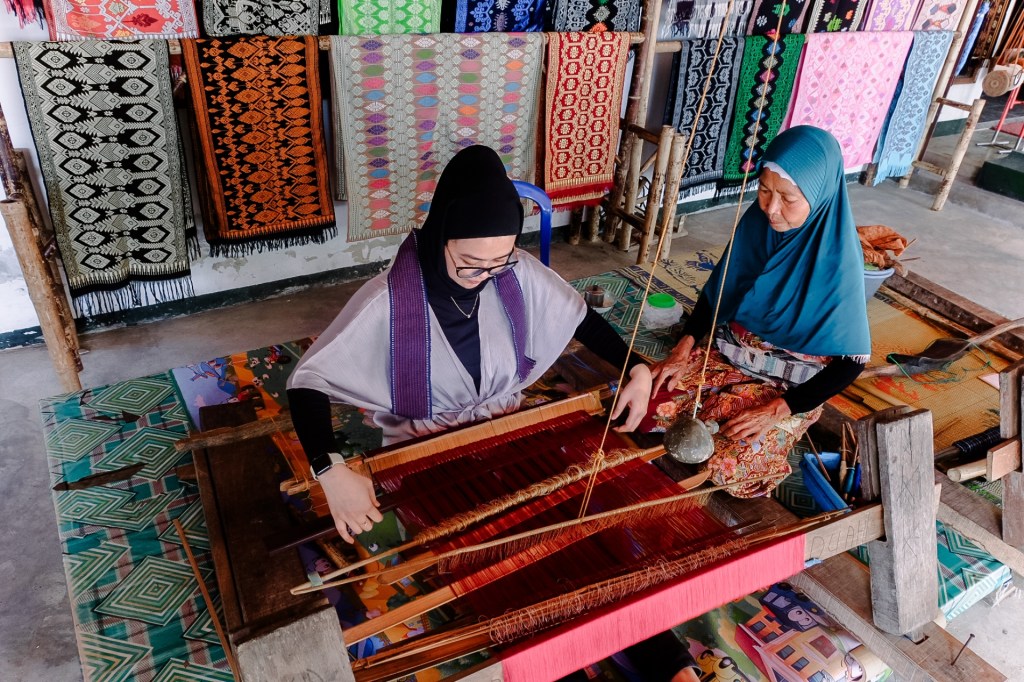
The inspiration for the various motifs found in Lombok’s woven fabrics is heavily influenced by the beliefs of the Sasak people. Before the arrival of Islam, the motifs in Lombok’s woven fabrics were dominated by images of living creatures, such as human figures, animals, and plants. These motifs were influenced by animism, dynamism, and Hindu teachings.
After the advent of Islam, the motifs in Lombok’s woven fabrics shifted to avoid depicting living creatures. The designs were then dominated by plant motifs, such as tendrils, life trees, and eight-petaled flowers. An example of cultural blending between Islam and local traditions is the appearance of the lotus flower in the subhanale motif.
The Unique Technique of Weaving in Lombok
Even though times have advanced, the weavers in Lombok still preserve the unique traditions of their craft. One of the most distinctive aspects of making Lombok’s ikat fabric is the method of creating the motifs by tying the threads.
The weaver ties certain parts of the threads and then dips them in dye. The tied sections do not absorb the dye, and this process is repeated multiple times to create a harmonious pattern and color on both sides of the fabric.
Preserving Tradition and the Environment
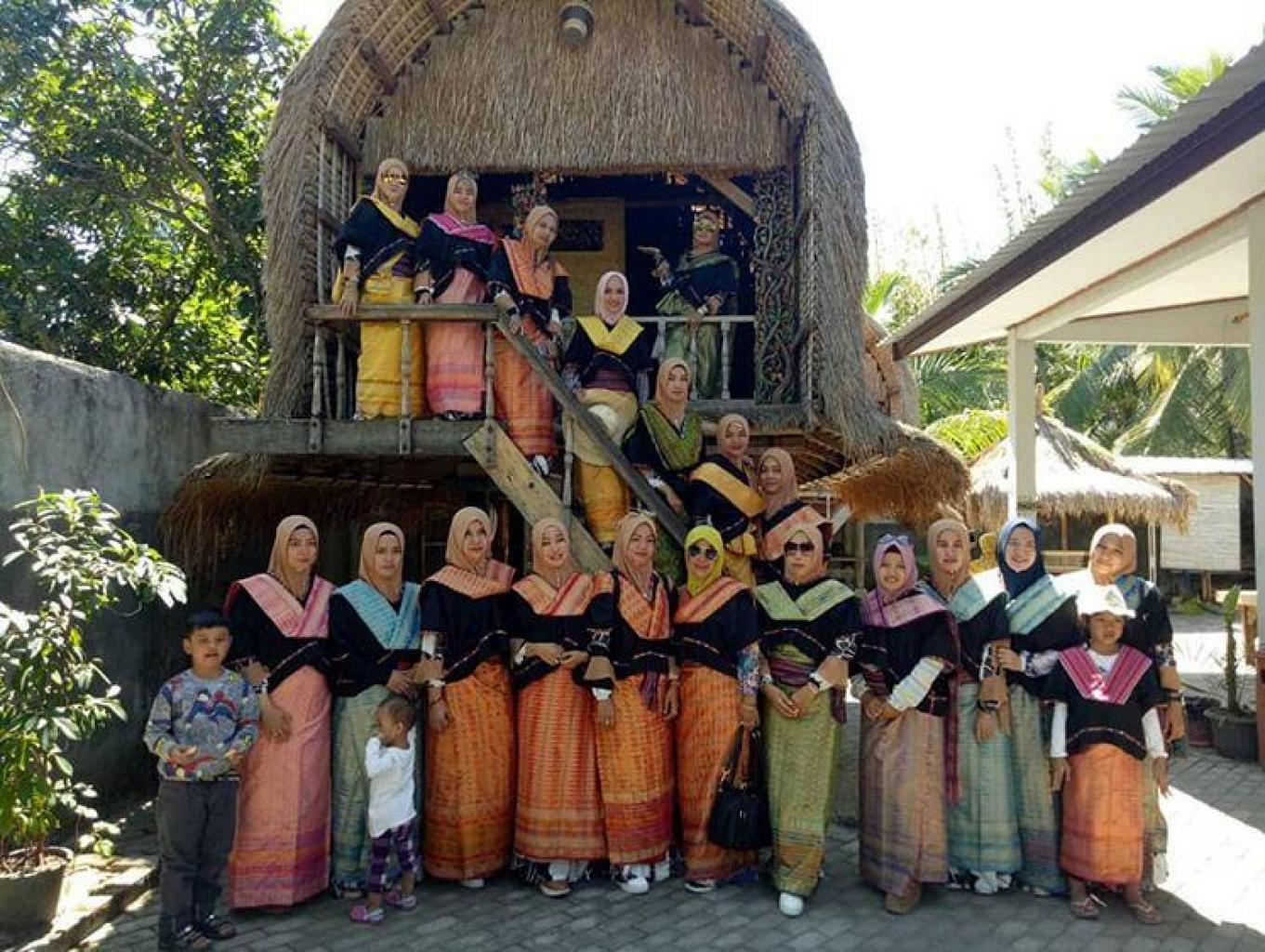
Today, the weavers of Lombok still use traditional and natural tools and materials. Therefore, it is not surprising to say that by purchasing a piece of Lombok’s woven fabric, one is also helping to preserve the environment.
Read also: How to Get to Gili Trawangan from Lombok
 lombokdispatch.id