
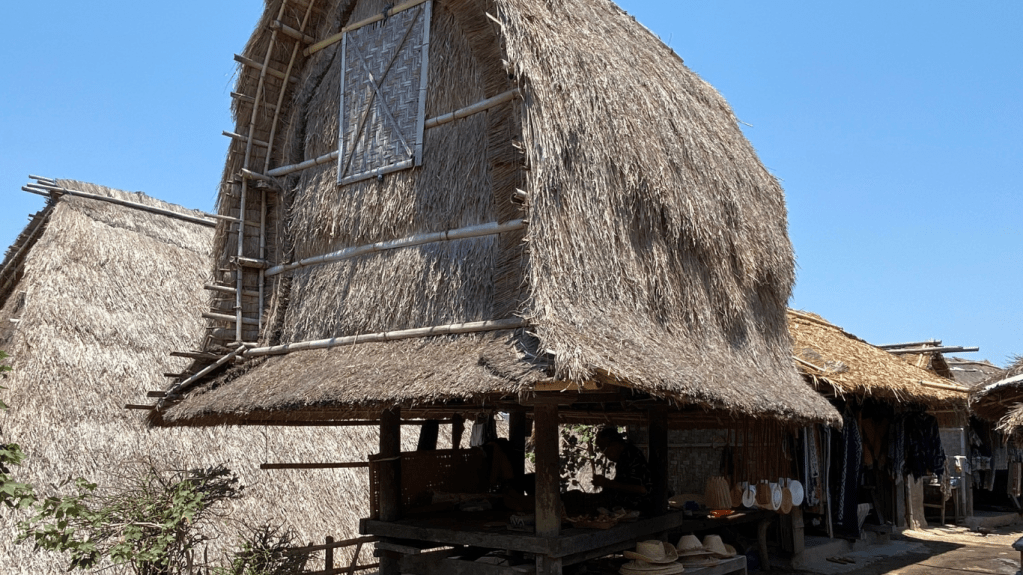
The Bale traditional house is one of the most unique and distinctive forms of architecture in Lombok, and it has managed to survive until today. Full of philosophical meaning, the Bale house stands as a testament to the high philosophy of life held by the people of Lombok, particularly the Sasak ethnic group.
For the people of Lombok, a Bale house is more than just a place to live. It is where a variety of hopes and strong traditional values are embedded. These cultural values are represented through the design and construction of the Bale house, making it not just a home but a living reflection of their beliefs.
One of the easiest-to-recognize unique features of the Bale house is the design of its front door. If you take a close look, the Bale house typically only has one door, which is quite low and small. This design requires guests to bow down when entering the house. The philosophy behind this small door is that it symbolizes respect — guests are expected to show respect to the homeowners when they enter the house.

The same respect can be seen in the architecture of the stairs in front of the Bale house. Usually, the stairs that lead into the house have only three steps. This number has a symbolic meaning, representing God, Mother, and Father. It’s a beautiful reminder of the spiritual values the Sasak people hold dear.
As for the roof structure, the Bale house also has its own philosophical meaning. The roof rises higher towards the back, symbolizing the connection between humans and God. Meanwhile, the overhang of the roof in the front represents the relationship between humans and each other.
Overall, the design of the Bale house’s roof illustrates the balance between relationships with other people, ancestors, and God. But it doesn’t stop there; the Sasak people are also very selective when choosing the location for building a Bale house.
There are certain places that are avoided when building a Bale house. These include locations such as old fireplaces, garbage dumps, and old wells. The community believes that if a house is built on such land, the homeowners might face bad luck or misfortune.
The 15-Generation Old Bale House
In today’s world, houses built based on deep philosophical values are becoming increasingly rare, especially in modern architecture. However, for the people of Lombok, the design and architecture of the Bale house are still being preserved.
You can see this tradition alive and well in Sasak Sade Village, a popular cultural village in Lombok. In this village, there are about 150 original Bale houses that remain intact. One of the most fascinating things about Sasak Sade Village is that you can visit the oldest Bale house, which has been lived in by more than 15 generations of a single family. It’s a living piece of history, showcasing how these traditional homes have withstood the test of time.
In Lombok, there are at least three types of Bale houses. The first is Bale Bonter, which is the traditional house of the village leaders. Then, there’s Bale Kodong, a house designated for newlyweds or elderly people who wish to spend their twilight years there. Lastly, there is Bale Tani, the house for families who are already settled.
Visiting Lombok Traditional House
The Bale house is not just a building; it’s a piece of Lombok’s soul. Visiting these homes gives you insight into the Sasak culture, traditions, and way of life. It’s also a reminder of how architecture can be deeply connected to spirituality, respect, and community.
If you find yourself in Lombok, take a trip to Sasak Sade Village and step into the world of the Bale house. You’ll not only learn about the Sasak people’s unique architecture but also get to see how their values, culture, and deep connection to the land have survived and thrived for generations.
Whether you’re a culture enthusiast, architecture lover, or just someone looking to explore a different side of Indonesia, the Bale house of Lombok is a must-see.
Read also: Serene Coastal Escape at Tanjung Aan Beach Lombok
 lombokdispatch.id