
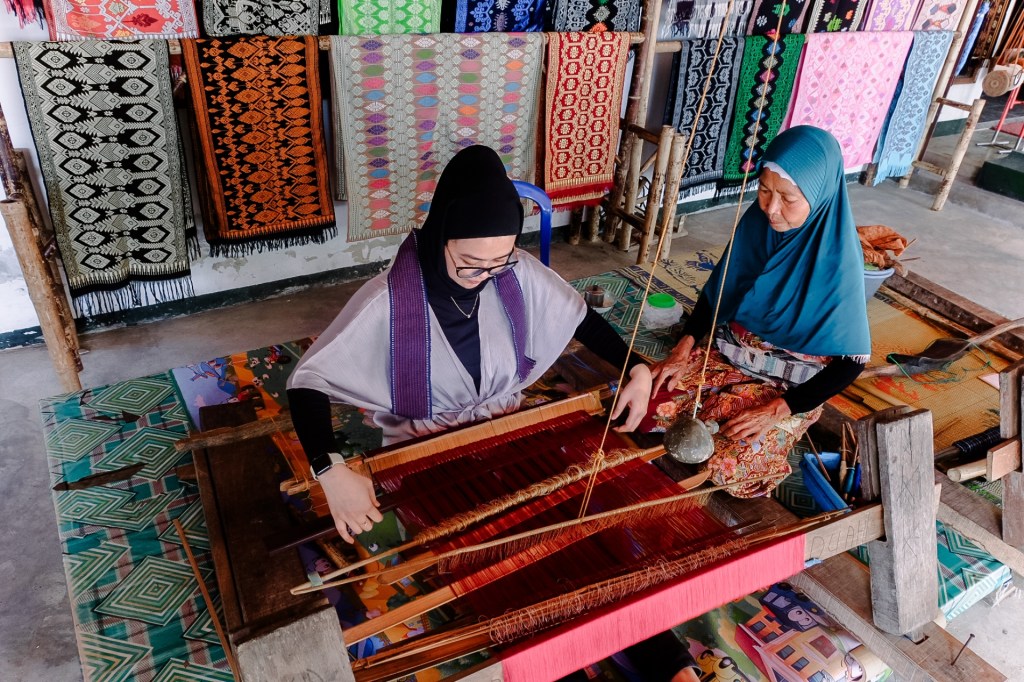
A village where tradition lives not in museums or monuments, but in the daily rhythm of its people. Sukarara Village, located in the Jonggat sub-district, is one of the most important cultural destinations in the region, best known for preserving and producing the intricate art of tenun songket—a traditional handwoven fabric rich in symbolism, history, and craftsmanship.
While Lombok may be best known for its beaches and waterfalls, Sukarara Village offers something deeper: a glimpse into a world where every thread tells a story.
A Village of Weavers

Sukarara village is more than just a tourist destination—it is a thriving center of craftsmanship. The vast majority of adult women in the village are weavers, and learning to weave is not optional but expected. In fact, it is tradition here that a young woman must be able to weave her own tenun cloth before she can be considered ready for marriage. This makes weaving not only a skill but a rite of passage.
Weaving in Sukarara is done the traditional way—on wooden backstrap looms, by hand, without modern machinery. The process can take days or even weeks, depending on the complexity of the design. Every strand, every color, and every motif has a meaning, often tied to Lombok’s cultural values, spiritual beliefs, or natural surroundings.
The Prestige of Tenun Subahnale
Among the various motifs produced in the village, one stands above the rest in prestige and popularity: Tenun Subahnale. Known for its elegant, refined look and intricate patterns, this particular style has graced not only the shoulders of local aristocracy but has also been worn by prominent national figures, including the President of Indonesia.
The story behind the name is just as captivating as the cloth itself. The term “Subahnale” is derived from the Arabic phrase Subhanallah, meaning “Glory be to God.” It is said that the weavers repeat this phrase throughout the weaving process, infusing the cloth with spiritual intention and respect. This connection to devotion and purity gives the cloth a sense of sacredness and cultural value that goes beyond aesthetics.
The Subahnale motif is known for its rich color palette, often featuring deep reds, golds, blacks, and emerald greens—each chosen for its symbolism. The designs are geometric yet flowing, bold yet balanced. When worn, they not only reflect the artisan’s skill but also the wearer’s appreciation for Indonesia’s cultural wealth.
A Hands-On Cultural Experience
People to Sukarara village are not simply observers; they are encouraged to participate. The villagers are proud of their heritage and are more than willing to share it. You can walk through narrow village lanes where weavers sit on the front porches of their homes, working on looms as they chat with neighbors and family members. Many of them invite guests to sit beside them and try weaving for themselves.
For those who wish to dive deeper, there are hands-on workshops available where visitors can learn the entire process—from spinning and dyeing the thread, to aligning the warp and weaving patterns into the fabric. It’s an eye-opening experience that fosters respect for the time, precision, and devotion behind every finished piece.
Local Markets and Artisan Shops
The village is also home to several art shops and craft stalls where visitors can purchase authentic tenun textiles, scarves, bags, and traditional clothing. Buying directly from the source supports the local economy and ensures the continuation of these ancestral practices. Each item purchased carries not just the artisan’s time, but generations of knowledge and cultural expression.
Getting to Sukarara Village
Reaching Sukarara Village is convenient for visitor. It is located just 10 minutes from Lombok International Airport, making it an ideal stop for those arriving or departing the island. The roads are accessible and the route is scenic, passing through rice fields and small villages typical of Lombok’s central highlands.
Upon arrival, guests are welcomed warmly by locals who often act as informal guides. They are happy to explain the meanings behind the motifs, the rituals involved in weaving, and the ways in which this tradition continues to shape the identity of their community.
Why Sukarara is a Must-Visit
Sukarara Village is more than just a weaving village—it is a place where culture is alive, where artistry is part of daily life, and where hospitality is woven into the very fabric of the community. It’s an ideal destination for those seeking authentic cultural encounters, far from the commercialized tropes of modern tourism.
Here, you don’t just admire the art—you meet the artists. You don’t just take home a souvenir—you carry with you a story. And that story is one of resilience, heritage, and the beauty of tradition passed down, one thread at a time.
If you’re visiting Lombok, make time for Sukarara. It’s not only a window into Sasak culture, but a vibrant, living classroom of Indonesian artistry at its finest.
Read also Top Things to Do at Lombok Wildlife Park: A Complete Guide



 lombokdispatch.id